Hormonal imbalance during menopause. Why support does not have to mean HRT.
Hormonal imbalance is often presented as the defining challenge of menopause. For many women, the conversation quickly shifts towards Hormone Replacement Therapy, as if it were the inevitable next step. Yet the reality of menopause is far more complex. It is not a single symptom, a single experience, or a single solution. Support does not automatically have to mean HRT.
Across the UK, women going through perimenopause and menopause report a wide range of physical and emotional symptoms. Hot flushes, disrupted sleep, fatigue, mood changes, joint discomfort and brain fog are frequently experienced together rather than in isolation. What stands out is not only how common these symptoms are, but how long they can persist and how deeply they affect daily life, confidence and overall wellbeing.
This complexity helps explain why treatment choices vary so widely. HRT can be an effective option for some women, but it is not necessarily an appropriate or desirable treatment for everyone. Concerns about side effects, long-term use, medical suitability and personal preference all influence decision making. For many, symptoms feel impactful but not severe enough to justify Hormone Replacement Therapy. This is where hormone free menopause support becomes an important and legitimate alternative.
Understanding hormonal imbalance
Hormonal imbalance during menopause is a natural biological transition, not a condition that automatically requires correction. As oestrogen and progesterone levels fluctuate and decline, multiple systems in the body are affected, including temperature regulation, sleep, mood, skin and cognitive function. However, the body retains its ability to adapt.
Supporting menopause is therefore not solely about replacing hormones. It can also involve helping the body cope with change, strengthening resilience and easing the symptoms that interfere with quality of life. This broader perspective creates space for non hormonal menopause treatments that focus on support rather than substitution.

Why many women look beyond HRT
Women’s real world experiences show that medical consultation is rarely the first step when symptoms begin. Many start by seeking information online, talking to friends or family, and making lifestyle adjustments. When healthcare professionals are consulted, women often want validation, understanding and guidance, not an automatic recommendation for HRT.
A significant number of women either never use Hormone Replacement Therapy or choose to stop it over time. Common reasons include safety concerns, fear of side effects, uncertainty about long term use, or simply feeling that HRT does not align with their personal approach to health. This does not reflect a lack of engagement. Instead, it highlights a desire for options that feel safer, more flexible and easier to integrate into daily life.
Supporting the body without HRT
The phrase supplements for hormonal imbalance can sometimes raise questions. Food supplements are not intended to replace hormones or replicate the effects of HRT. Their roles are different. Well formulated supplements can support the body systems most affected by hormonal changes, such as energy levels, emotional balance, sleep quality and cognitive performance.
For many women, this approach feels more proportionate to their symptoms. Supplements can also be used over time, adapted as needs change, and combined with other non hormonal strategies. This flexibility is particularly relevant given that menopause is a long phase rather than a single moment.
Importantly, supplements are often part of a broader support framework that includes nutrition, physical activity, stress management and sleep hygiene. This reflects how women naturally manage menopause in real life, rather than relying on one single intervention.

How Serelys Meno supports hormonal imbalance naturally
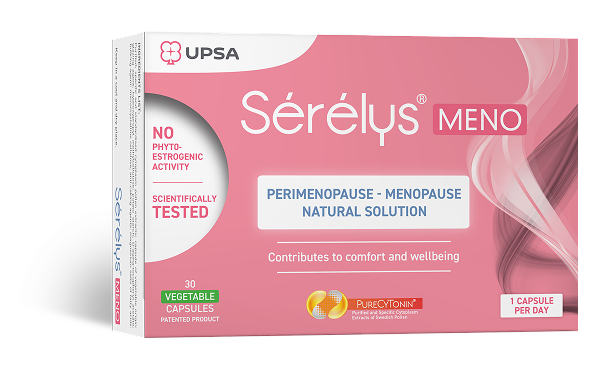
Serelys Meno is a non-hormonal menopause supplement designed to support women through hormonal changes without altering hormone levels.
The key ingredient in Serelys Meno capsules is a purified pollen cytoplasm extract, developed using patented technology. This process removes the pollen shell while preserving the nutrient-rich cytoplasm, which contains amino acids and micronutrients that support overall vitality and resilience during periods of hormonal fluctuation.
Rather than replacing or mimicking hormones, Serelys Meno works by supporting the body’s ability to cope with hormonal imbalance. By helping to reduce menopause-related fatigue and improve general wellbeing, it may indirectly ease emotional symptoms such as mood swings, frustration and anxiety, which are commonly associated with hormonal disruption.
Serelys Meno is hormone-free and phytoestrogen-free, meaning it does not interact with oestrogen receptors or interfere with the body’s natural hormonal processes. This makes it a suitable option for women looking for a natural, non-hormonal approach to hormone balance, including those who cannot or choose not to use HRT.

Menopause support should reflect real lives
One of the clearest messages from women’s experiences is that menopause is highly individual. Some women seek fast acting solutions. Others prioritise reassurance, safety or ingredient transparency. Many move between approaches as their symptoms evolve.
This is why reframing the conversation around menopause treatments matters. HRT is one option among many, not a default solution. Supplements and other non hormonal approaches deserve to be recognised as valid forms of support.
At Serelys, menopause support is about respecting women’s choices and lived experiences. Hormonal imbalance is part of the transition, but it does not define it. With the right information and support, women can navigate menopause in a way that feels balanced, informed and aligned with their values, without assuming that HRT is the only path forward.
Explore Serelys Meno further, and start your non-hormonal support journey today.